Quick answer
Processing timing is controlled by the IRS, and Tax Paperwork does not promise a Form 2553 processing window. Keep the signed election, destination source, fax or mail proof, and later IRS letters, then use IRS-controlled follow-up when timing matters.
Why this page avoids a promised timeline
Competitor pages often publish informal processing windows, but the durable answer for a YMYL page is that IRS processing and correspondence control the status. A fax or mail receipt is useful proof, but it is not an acceptance letter.
Records to prepare before follow-up
- Entity name, EIN if already issued, intended effective date, tax year, and shareholder consent records.
- The IRS destination source used on the day the election was sent.
- Fax confirmation, mailing receipt, delivery proof if available, and any later IRS correspondence.
Sources and limits
This page is for orientation and not tax, legal, accounting, filing, payment, mailing, faxing, upload, confirmation, or representation advice. IRS.gov and current official instructions control Form 2553 mechanics.
What to check next
Keep the signed election, shareholder consent records, destination source, fax or mail proof, and any IRS response. Use official IRS follow-up channels or professional help when timing affects payroll, returns, or entity records.
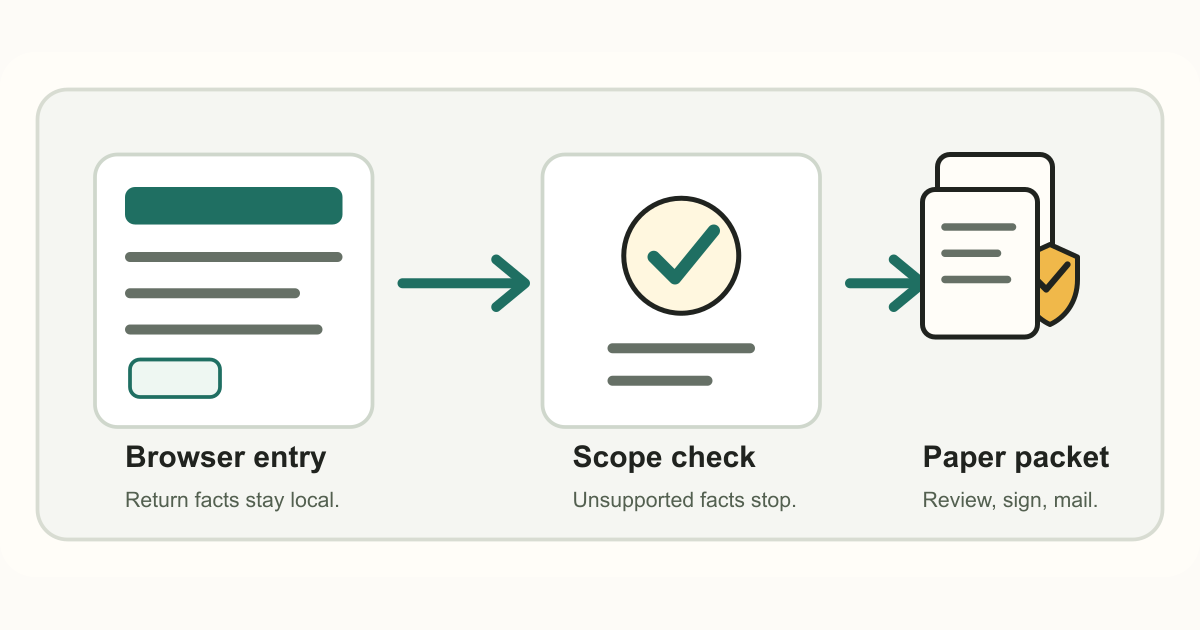
Tax Paperwork can help organize a narrow browser-local draft preview where supported. You remain responsible for checking official sources, getting professional advice when needed, and keeping customer-controlled submission records.
Common risk
A common mistake is treating a draft, checklist, payment receipt, upload receipt, mailing receipt, or third-party summary as IRS confirmation. Keep records, but verify official channel rules and follow-up through IRS.gov, official correspondence, or qualified professional help.
Official source starting points
Last updated June 24, 2026.