Quick answer
Form 4506-T is a taxpayer transcript request path; Form 4506-C is tied to IVES third-party transcript requests, commonly for lenders, with taxpayer consent. Current IRS sources and requester instructions control which path applies. Tax Paperwork does not collect signed transcript requests or identity documents.
Quick comparison
| Form | Typical use | Privacy check |
|---|---|---|
| Form 4506-T | Taxpayer request for tax return, account, wage and income, record of account, or verification of non-filing transcript paths. | Verify transcript type, tax years, identity facts, and destination before sending. |
| Form 4506-C | IVES request where a lender or other third party may receive transcripts with taxpayer approval. | Verify taxpayer information, IVES participant, client/lender, transcript type, tax years, and signer title. |
Sources and limits
This page is for orientation and not tax, legal, accounting, filing, payment, mailing, faxing, upload, confirmation, or representation advice. IRS.gov and current official instructions control Form 4506-T mechanics.
What to check next
Before sending a transcript request to a lender, school, agency, or third party, verify the current IRS transcript source and understand who will receive the tax records.
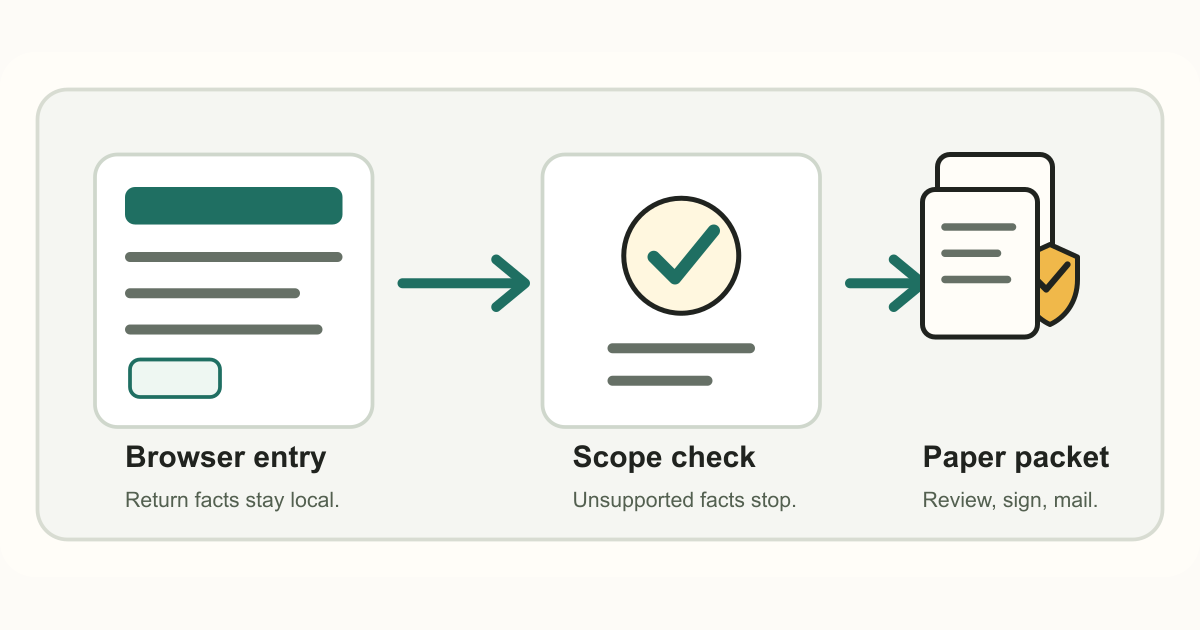
Tax Paperwork can help organize a narrow browser-local draft preview where supported. You remain responsible for checking official sources, getting professional advice when needed, and keeping customer-controlled submission records.
Common risk
A common mistake is treating a draft, checklist, payment receipt, upload receipt, mailing receipt, or third-party summary as IRS confirmation. Keep records, but verify official channel rules and follow-up through IRS.gov, official correspondence, or qualified professional help.
Official source starting points
Last updated June 24, 2026.