Quick answer
Tax Paperwork does not file Form 56 online, validate fiduciary authority, or open IRS account access. Use the preview only for known authority and tax-matter facts, then follow current IRS instructions or get professional help for disputed estate, trust, probate, refund, or representative-authority cases.
Sources and limits
Use the linked IRS Form 56, instructions, and Form 2848 pages below as official source starting points. This guide is for orientation and does not provide tax, legal, fiduciary, probate, estate, trust, refund, representative-authorization, account-access, or filing-channel advice.
Direct answer for online filing
The IRS says Form 56 is used to notify the IRS of the creation or termination of a fiduciary relationship under section 6903 and to give notice of qualification under section 6036.
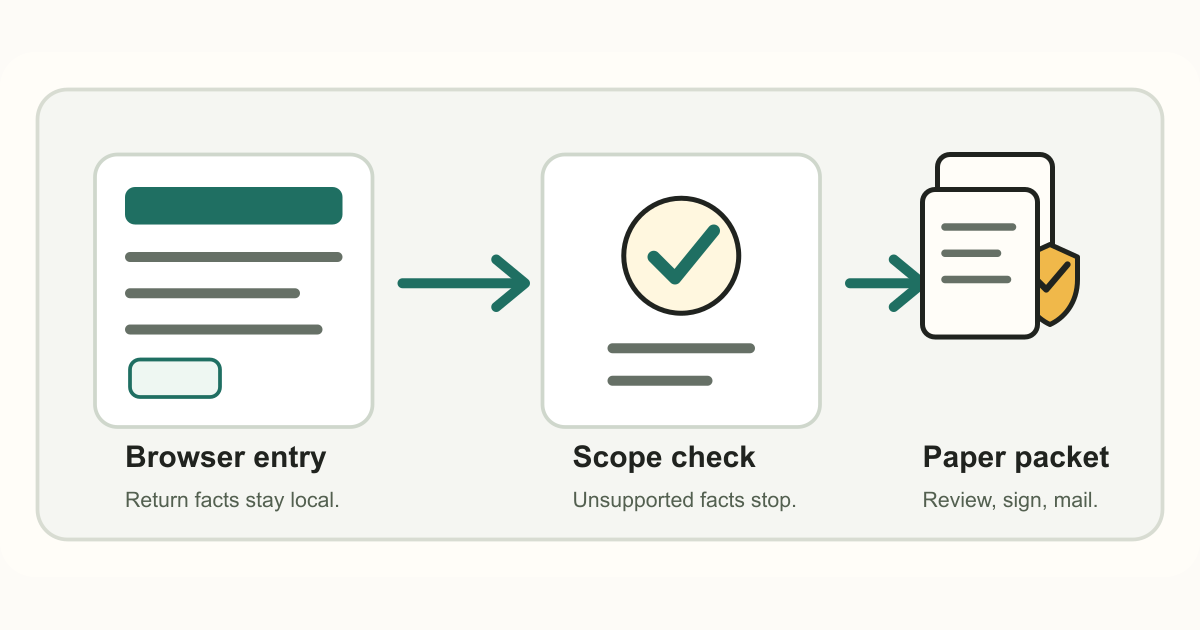
Tax Paperwork is not IRS.gov, not a filing portal, not a mailing service, and not a status service. A browser-local Form 56 draft is only a preparation aid for facts the fiduciary already knows.
Fiduciary notice is not authority validation
Form 56 gives the IRS notice of a fiduciary relationship; the preview does not prove who has authority to act, decide who may sign, or validate appointment documents, court orders, trust instruments, letters testamentary, or other records.
If authority is contested, missing, expired, revoked, or tied to active court, probate, trust, estate, or refund questions, use professional review before relying on a draft.
Filing mechanics stay IRS-controlled
The Form 56 instructions describe filing mechanics, including service-center handling and special proceedings. Current destinations and procedural details should come from IRS.gov and the user's own professional review.
Tax Paperwork does not choose a service center from private facts, mail the notice, monitor correspondence, update an address, open an IRS account, or handle related Form 1041, Form 706, refund, identity-theft, or penalty paths.
Where Tax Paperwork fits
The preview organizes known fiduciary, taxpayer, authority, tax type, and form-number facts and creates a watermarked local draft.
It does not decide who may act as fiduciary, prove authority, prepare related returns, request IRS account access, or substitute for Form 2848 when a representative authorization is needed.
When to stop
- Contested authority, missing court or trust documents, probate disputes, POA questions, refund claims, or Form 1041/Form 706 exposure.
- Any situation where the fiduciary role or legal authority is unclear.
Related Guides And Draft Previews
How this page was prepared
This page starts from the official sources linked below, keeps filing-channel decisions with IRS.gov or qualified professionals, and shows the same limits that appear in the public draft previews.
Tax Paperwork pages are maintained under the editorial policy and checked against the public-preview evidence described on the preview confidence page. Last page review: June 14, 2026.
Current Tax Paperwork boundary
Tax Paperwork is not tax, legal, accounting, entity-structuring, treaty, fiduciary, valuation, or filing-channel advice. It is not IRS.gov and does not submit, transmit, fax, mail, upload, pay, or monitor IRS paperwork.